Pairing by Wine Style
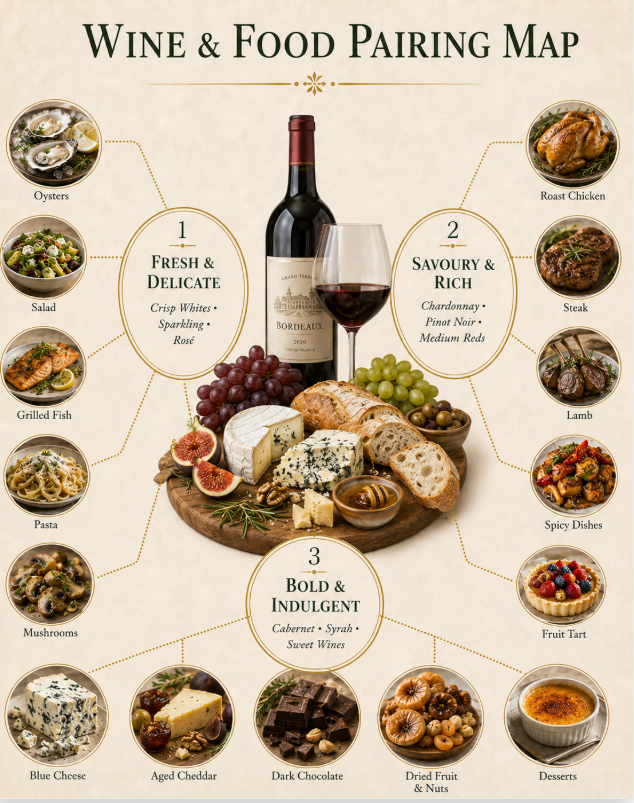
Sparkling Wine
Sparkling wine is one of the most versatile styles for food pairing. The bubbles refresh the palate, while the acidity cuts through richness and salt. This makes sparkling wine perfect not only for celebrations, but also for everyday food.
Sparkling wine pairs beautifully with oysters, sushi, seafood, fried food, salty snacks, caviar, creamy cheeses and even fish and chips.
Champagne, English sparkling wine, Crémant, Cava and Franciacorta are wonderful choices when you want elegance, freshness and energy at the table.
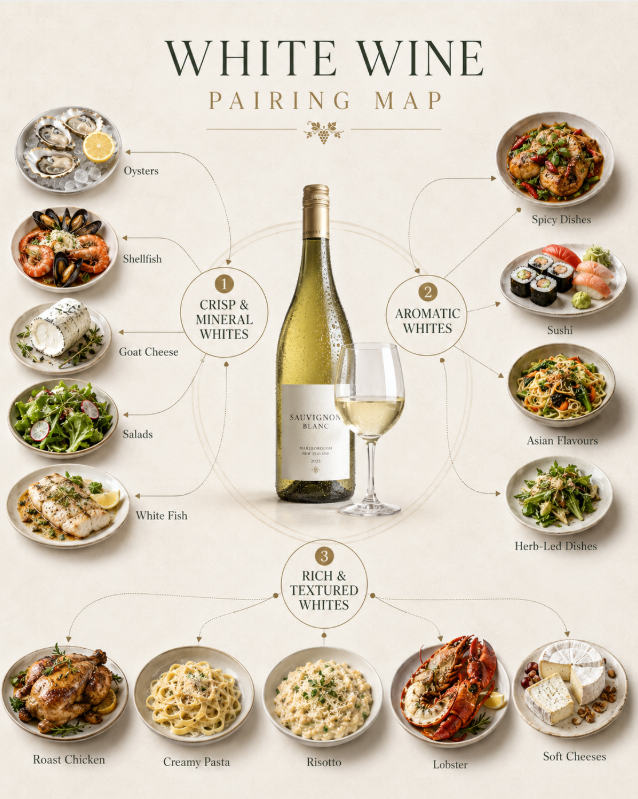
Crisp White Wines
Crisp white wines are fresh, bright and usually full of citrus, green fruit, herbs or mineral notes. They are ideal with lighter dishes and anything that needs freshness.
They pair beautifully with seafood, salads, goat cheese, grilled vegetables, lemon chicken, fresh herbs, asparagus, prawns and white fish.
Good examples include Sauvignon Blanc, Albariño, Assyrtiko, Vermentino, Chablis, Picpoul and Muscadet.
These wines are especially useful when the dish has lemon, herbs, olive oil or a salty coastal character.
Aromatic White Wines
Aromatic white wines have expressive floral, spicy and fruit-driven aromas. They are particularly beautiful with dishes that have fragrance, spice or sweetness.
They pair well with Thai food, Indian spices, Moroccan dishes, Vietnamese salads, soft cheeses, fragrant herbs and mildly spicy dishes.
Riesling, Gewürztraminer, Muscat, Torrontés and Viognier are lovely examples.
Aromatic whites can feel very elegant when paired correctly because they do not fight with spice. Instead, they wrap around it.
Full-Bodied White Wines
Full-bodied white wines have more texture, richness and depth. They often work well with dishes that feel creamy, buttery, roasted or luxurious.
They pair beautifully with roast chicken, lobster, scallops, creamy pasta, mushroom dishes, buttery sauces, turkey, risotto and richer fish dishes.
Chardonnay is the classic example, especially white Burgundy. Viognier and some white Rhône blends can also be beautiful.
These wines are ideal when a crisp white feels too light but a red wine feels too heavy.
Rosé Wine
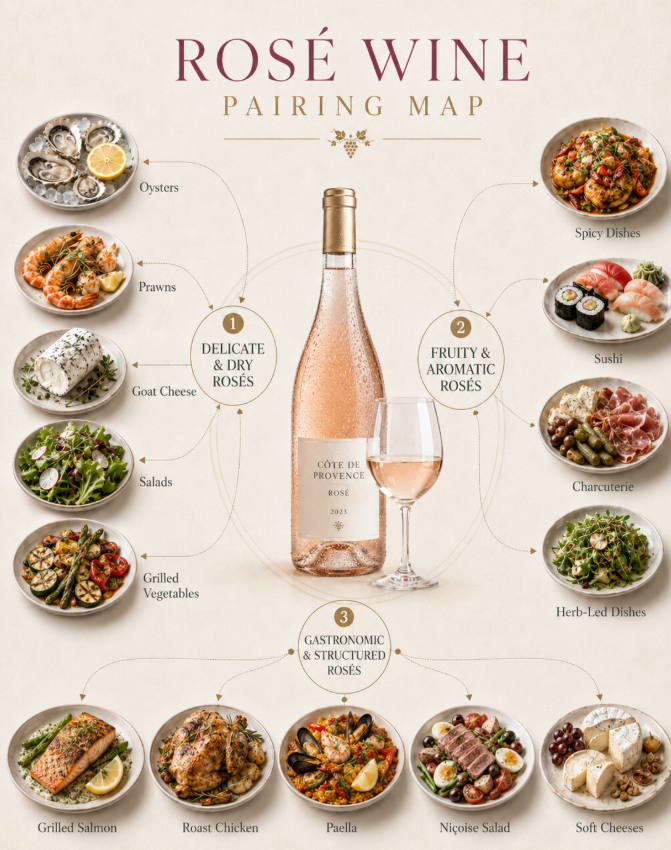
Rosé is one of the most versatile and charming wines at the table. It sits beautifully between white and red wine: fresh and bright like a white, but often with enough fruit, texture and structure to handle more flavour. This is why rosé can move so easily across a meal, from seafood and salads to grilled vegetables, chicken, charcuterie and Mediterranean dishes.
A good rosé is not simply a “summer wine”. It can be delicate and pale, with citrus, red berries and floral notes, or deeper and more gastronomic, with spice, herbs and savoury character. The style depends on the grape, region, climate and winemaking, which is why rosé can be much more serious and food-friendly than people often expect.
Pale, dry rosés, especially from Provence and coastal Mediterranean regions, are beautiful with oysters, prawns, goat cheese, fresh salads, grilled fish and light vegetable dishes. Their freshness and gentle fruit make them elegant without overpowering the food.
Fruity and aromatic rosés work especially well with dishes that have spice, herbs or a little sweetness. They can be lovely with sushi, spicy prawns, Thai-inspired dishes, charcuterie, olives, tomato salads and herb-led Mediterranean plates. The fruit in the wine softens spice, while the acidity keeps everything fresh.
More structured rosés can feel almost like a light red wine. These pair beautifully with grilled salmon, roast chicken, paella, tuna, lamb, grilled vegetables, Niçoise salad and soft cheeses. A deeper rosé can be an excellent choice when a white wine feels too light but a red wine feels too heavy.
For me, rosé belongs to generous, relaxed tables: seafood, olive oil, herbs, tomatoes, grilled vegetables, soft cheeses, charcuterie and long conversations. It is a wine of balance, pleasure and ease — elegant enough for a beautiful lunch, but relaxed enough to enjoy without overthinking.
Seafood
Seafood is one of the most beautiful foods to pair with wine because it naturally loves freshness, acidity and minerality. The aim is usually to keep the pairing clean, elegant and lifted, rather than heavy or overpowering. With seafood, wine should feel like a squeeze of lemon, a sea breeze, or a touch of brightness that makes the dish come alive.
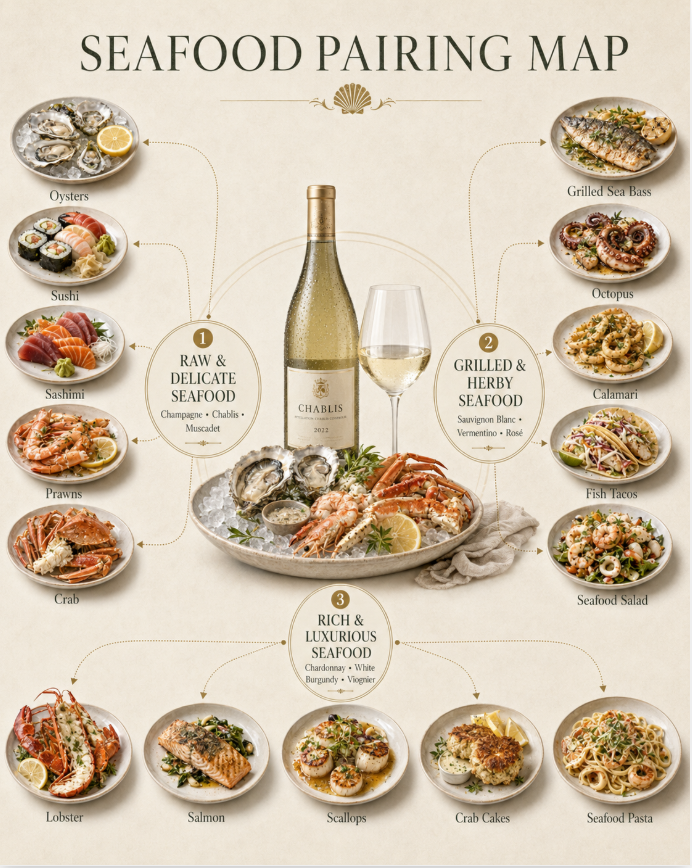
The most delicate seafood — oysters, sashimi, sushi, prawns, crab and simply prepared shellfish — works best with wines that are crisp, dry and precise. Champagne, Chablis, Muscadet, Albariño, Assyrtiko and Vermentino are all beautiful choices. These wines bring citrus, saltiness and freshness, which complement the natural sweetness and purity of the seafood without covering it.
Oysters are especially classic with Champagne, Chablis or Muscadet. The combination works because both the wine and the oyster have a mineral, saline quality. It feels elegant, clean and almost effortless. Sushi and sashimi also need wines with freshness and delicacy, such as dry Riesling, Albariño, Champagne or a very crisp white wine. The goal is to respect the subtle texture of the fish.
Grilled fish can handle a little more body and aroma. Sea bass, sea bream, turbot and grilled prawns pair beautifully with Vermentino, Albariño, Sauvignon Blanc, Assyrtiko or a fresh Chardonnay. If the dish has herbs, olive oil, lemon or Mediterranean flavours, wines with brightness and a coastal character work especially well.
Richer seafood needs a wine with more texture. Lobster, scallops, crab cakes, salmon and seafood pasta can be beautiful with Chardonnay, white Burgundy, Viognier or richer sparkling wines. Here, the wine needs enough body to match butter, cream, sauce or natural richness in the dish. A delicate white may disappear, but a textured white wine can create a luxurious and balanced pairing.
Rosé can also be a lovely seafood wine, especially with grilled prawns, octopus, tuna, salmon, seafood salads and Mediterranean-style fish dishes. A pale, dry rosé brings freshness, while a deeper rosé can handle more flavour, spice and olive oil.
For me, the best seafood pairings feel fresh, graceful and slightly coastal. Think oysters with Champagne, grilled sea bass with Vermentino, prawns with Albariño, lobster with white Burgundy, or octopus with a dry rosé. Simple seafood usually asks for freshness. Richer seafood asks for texture. And when in doubt, choose a wine with good acidity — it will almost always make the dish feel brighter, cleaner and more alive.
Red Meat
Red meat naturally works beautifully with structured red wines because both have depth, intensity and richness. The protein in meat softens the tannins in wine, while the body of the wine stands up to the flavour of the dish. This is why a powerful red can feel too firm on its own, but suddenly becomes smoother, rounder and more elegant when served with steak, lamb or slow-cooked beef.
Tannins are especially important here. They create that dry, grippy sensation in the mouth, which can sometimes feel intense without food. But with red meat, tannins become more balanced. The fat and protein in the meat soften the structure of the wine, while the wine brings freshness, fruit, spice and savoury character to the dish.
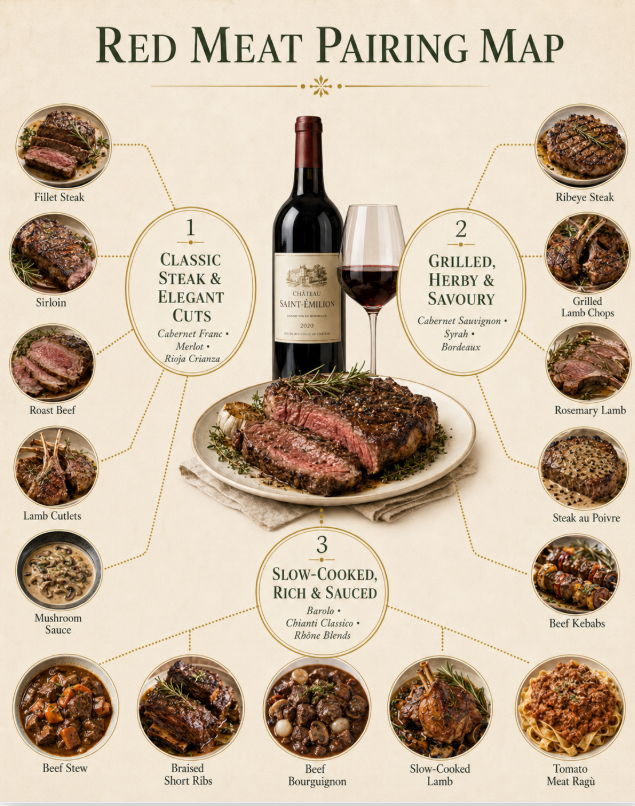
Steak is one of the most classic red wine pairings. A grilled ribeye, sirloin or fillet works beautifully with Cabernet Sauvignon, Bordeaux, Malbec, Syrah or a powerful Super Tuscan. These wines have enough tannin and body to match the richness of the meat, especially when there is char, pepper, butter or a rich sauce involved.
Slow-cooked beef needs a slightly different approach. Dishes such as beef stew, braised short ribs, beef bourguignon or slow-cooked ragù work well with wines that have depth, warmth and savoury complexity. Rioja, Chianti Classico, Barolo, Brunello, Rhône reds, Merlot blends and aged Bordeaux can all be beautiful here. The slow cooking creates softness and richness, so the wine should feel layered rather than just powerful.
Lamb is another wonderful match for red wine, especially because it often has herbal, earthy and slightly sweet flavours. Rioja, Syrah, Bordeaux, Cabernet Franc, Grenache, Chianti Classico, Öküzgözü and Boğazkere can all pair beautifully with lamb. If the lamb is grilled, choose a wine with structure. If it is slow-cooked, choose something deeper and more savoury. If it is served with rosemary, thyme, garlic or spices, wines with herbal or earthy notes can feel especially elegant.
The cut of meat also matters. Leaner cuts, such as fillet, do not always need the biggest wine. They can work with smoother reds like Merlot, Pinot Noir, Cabernet Franc or an elegant Rioja. Fattier cuts, such as ribeye or lamb shoulder, can handle more tannin, more body and more intensity. The richer the meat, the more structure the wine can have.
Sauces are just as important as the meat itself. A peppercorn sauce can work beautifully with Syrah or Cabernet Sauvignon. A red wine jus naturally suits Bordeaux, Rioja or Rhône blends. A tomato-based meat sauce loves Sangiovese, Barbera or Chianti because their acidity matches the tomato. A mushroom or truffle sauce can be beautiful with Pinot Noir, Nebbiolo or aged red Burgundy.
For me, red meat pairings are about power, but also balance. The wine should not simply be big for the sake of being big. It should have enough freshness to keep the dish alive, enough tannin to meet the richness of the meat, and enough complexity to make the pairing feel complete.
A good red meat pairing feels generous and satisfying: Cabernet Sauvignon with steak, Rioja with lamb, Syrah with grilled meats, Barolo with slow-cooked beef, or Boğazkere with richly seasoned lamb. The best pairings bring out the depth of the meat while allowing the wine to become softer, warmer and more expressive.
Pasta and Pizza
Pasta and pizza are some of the most enjoyable foods to pair with wine because they are generous, comforting and full of flavour. But the key thing to remember is this: the pairing is not really about the pasta shape or the pizza base — it is about the sauce, toppings and overall intensity of the dish.
A simple tomato pasta needs a very different wine from a creamy mushroom pasta. A Margherita pizza needs something fresher and lighter than a rich pizza with sausage, salami or truffle. Once you look at the sauce first, the pairing becomes much easier.
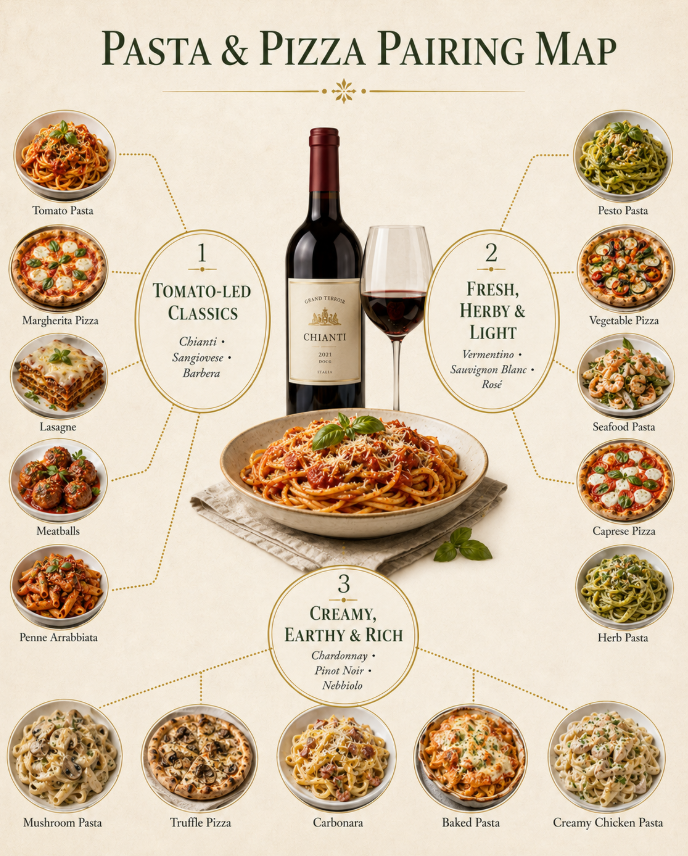
Tomato-based dishes usually need wines with good acidity because tomatoes are naturally acidic. This is why Italian reds work so beautifully here. Chianti, Sangiovese, Barbera, Nero d’Avola and Montepulciano are excellent with tomato pasta, pizza, lasagne and meatballs. The acidity in the wine matches the acidity in the tomato, while the red fruit and savoury notes bring warmth and depth.
For classic pizza, Italian wines are usually the safest and most natural choice. A Margherita pizza works beautifully with Chianti, Barbera, Valpolicella or even a dry rosé. The tomato, mozzarella and basil need a wine that is fresh, bright and not too heavy. For pepperoni, salami or sausage pizza, you can go slightly richer with Primitivo, Nero d’Avola, Montepulciano or a juicy Grenache.
Creamy pasta needs a different approach. Dishes such as carbonara, Alfredo, creamy chicken pasta or pasta with a butter-based sauce are better with wines that have texture but also freshness. Chardonnay, white Burgundy, Pinot Grigio, Soave or a richer Vermentino can work very well. The wine should soften into the creaminess, but still have enough acidity to keep the dish from feeling too heavy.
Mushroom pasta is one of my favourite pairings because it can be so elegant. Mushrooms have an earthy, savoury flavour, so they work beautifully with wines that have similar notes. Pinot Noir, Nebbiolo, Barolo, Barbaresco, aged Chianti or even red Burgundy can be wonderful. If the mushroom dish is creamy, a textured Chardonnay can also be beautiful.
Seafood pasta needs freshness. Linguine with prawns, spaghetti alle vongole, seafood risotto or lemony seafood pasta work best with crisp whites such as Vermentino, Albariño, Soave, Pinot Grigio, Chablis or Assyrtiko. If there is tomato in the seafood sauce, a light red or rosé can also work, but the wine should not be too tannic.
Pesto pasta needs a wine that can handle herbs, garlic, olive oil and richness. Sauvignon Blanc, Vermentino, Grüner Veltliner, Soave or a fresh dry rosé can be lovely. The green, herbal character of the dish needs a wine with brightness and lift.
For richer baked pasta dishes, such as lasagne, baked ziti or pasta al forno, you can choose a medium-bodied red with structure and freshness. Chianti Classico, Barbera, Montepulciano, Sangiovese and Rioja all work well. These dishes have cheese, tomato, meat and warmth, so the wine needs to be generous but not too heavy.
For me, pasta and pizza pairings are about comfort and pleasure. Italian food and Italian wine belong together because they have grown around the same flavours: tomato, olive oil, basil, garlic, herbs, cheese, cured meats and warmth. The best pairing does not need to be complicated. A good Chianti with tomato pasta, a Barbera with pizza, a Chardonnay with creamy pasta, or a Pinot Noir with mushrooms can feel simple, elegant and completely satisfying.
Spicy Food
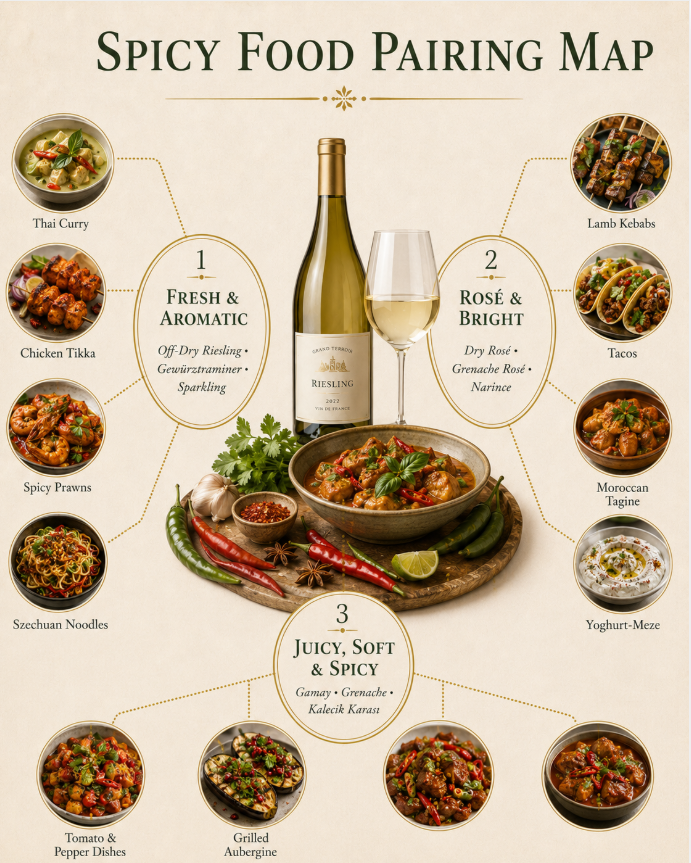
Spicy food is one of the most exciting, but also one of the most delicate, areas of wine pairing. The aim is not to make the wine compete with the spice. The best pairing should soften the heat, lift the flavours, and make the dish feel more balanced.
Very tannic, heavily oaked or high-alcohol wines can make spicy food feel hotter and harsher. Alcohol intensifies heat, and tannins can clash with chilli, pepper and strong spices. This is why a big Cabernet Sauvignon or powerful Barolo may feel uncomfortable with a fiery dish, even if the wine is beautiful on its own.
Wines with freshness, fruit and a little sweetness are usually much better. Off-dry Riesling is one of the classic choices because it has bright acidity, fragrant fruit and gentle sweetness, which can calm spice without making the pairing feel heavy. Gewürztraminer is also lovely with aromatic spices because it has floral, lychee-like, exotic notes that work beautifully with Thai, Indian, Moroccan and Middle Eastern flavours.
Sparkling wine can also be excellent with spicy food. The bubbles refresh the palate, while the acidity cuts through richness, oil and salt. A good sparkling wine can make fried, spicy or salty dishes feel cleaner and lighter.
Rosé is another very useful option, especially with Mediterranean, Turkish, Middle Eastern or mildly spicy dishes. A fresh, dry rosé works beautifully with grilled prawns, spicy chicken, lamb kebabs, tomato-based dishes, peppers, aubergine, herbs and yoghurt sauces. It has enough fruit to soften spice, but still feels fresh and elegant.
Light, juicy reds can also work if the spice is not too intense. Gamay, Grenache, Pinot Noir, Cinsault, Frappato and Kalecik Karası can be lovely with dishes that have warmth and spice but are not aggressively hot. The key is to avoid too much tannin and too much alcohol.
The type of spice matters too. Chilli heat needs freshness and sometimes sweetness. Aromatic spices like cumin, coriander, cinnamon, cardamom and clove can work beautifully with wines that have perfume and fruit. Smoky spices and grilled flavours can handle rosé, Grenache, Syrah or softer Mediterranean reds. Creamy spicy dishes, such as curries with coconut milk or yoghurt, often pair well with aromatic whites because the wine lifts the richness.
For Turkish and Aegean-inspired spicy dishes, I would look at rosé, Narince, Emir, Kalecik Karası or Öküzgözü depending on the dish. Spiced lamb or kebabs can be beautiful with Öküzgözü or a juicy Grenache. Aubergine, peppers and tomato-based dishes can work with Kalecik Karası, Sangiovese or rosé. Yoghurt-led dishes often need freshness rather than power.
A simple rule: the hotter the dish, the cooler, fresher and softer the wine should feel. Avoid aggressive tannins. Avoid very high alcohol. Look for acidity, fruit, fragrance and balance.
For me, spicy food and wine pairing is about softness and lift. The wine should not fight the dish. It should calm the heat, brighten the spices, and make every bite feel more enjoyable.
Classic Pairings Everyone Should Know
Some pairings have become classics because they simply work.
Champagne and oysters are elegant because both feel fresh, mineral and refined.
Sauvignon Blanc and goat cheese work because the wine’s acidity cuts through the creaminess of the cheese.
Chablis and seafood are a perfect example of purity and freshness.
Riesling and spicy food show how sweetness and acidity can calm heat.
Pinot Noir and mushrooms work because both have earthy, delicate flavours.
Chianti and tomato pasta are classic because the acidity of the wine matches the acidity of the tomato.
Rioja and lamb bring together warmth, spice and savoury depth.
Cabernet Sauvignon and steak work because tannin and protein soften each other.
Sauternes and blue cheese are beautiful because sweetness and salt create contrast.
Port and Stilton are rich, powerful and indulgent — a proper after-dinner pairing.
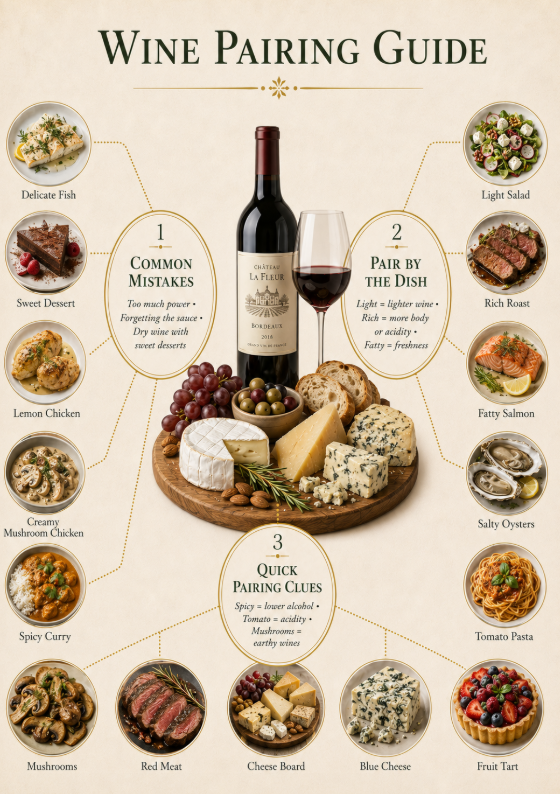
Common Wine Pairing Mistakes
One of the most common mistakes is serving a wine that is too powerful for the food. A heavy red with delicate fish can make the dish taste metallic or disappear completely.
Another mistake is pairing dry wine with very sweet desserts. If the dessert is sweeter than the wine, the wine can taste sharp and unbalanced.
People also often forget about the sauce. The sauce can completely change the pairing. A grilled chicken breast with lemon needs a different wine from chicken in a creamy mushroom sauce.
With spicy food, avoid very high-alcohol or heavily tannic reds. They can make the heat feel stronger.
And finally, do not assume cheese always needs red wine. Some of the most beautiful cheese pairings are with white, sparkling or sweet wines.
My Simple Pairing Guide
If the dish is light, choose a lighter wine.
If the dish is rich, choose a wine with more body or acidity.
If the dish is fatty, choose freshness.
If the dish is spicy, choose lower alcohol and possibly a touch of sweetness.
If the dish is salty, sparkling wine or slightly sweet wine can be beautiful.
If the dish has tomato, choose a wine with acidity.
If the dish has mushrooms, choose something earthy.
If the dish has red meat, choose structure and tannin.
If the dish is dessert, make sure the wine is sweeter than the food.
Wine & Food Pairings
Wine and food pairing is one of the most beautiful parts of wine. It is not about memorising strict rules or trying to sound technical. For me, it is about understanding balance: how a wine can lift a dish, soften its richness, brighten its flavours, or make a simple dinner feel more memorable.
The best pairings usually happen when the wine and the food respect each other. A delicate dish needs a wine with elegance. A rich, slow-cooked meal needs a wine with more depth and structure. A spicy dish may need sweetness or freshness. A creamy dish often needs acidity. Once you understand these small principles, pairing wine becomes much more intuitive and enjoyable.
The Basic Principles of Wine Pairing
Before thinking about specific grapes, regions or labels, it helps to understand the foundations of pairing. Wine has body, acidity, tannin, sweetness, alcohol, texture and aroma. Food has weight, fat, salt, spice, sweetness and intensity. A good pairing is simply when these elements feel harmonious together.
The easiest place to start is balance. A light, delicate dish usually needs a lighter wine, while a richer dish needs a wine with more depth and structure. A fresh seafood plate may be lifted by a crisp white wine, while slow-cooked lamb or steak needs something with more body, tannin and warmth.
Acidity is one of the most useful tools in wine pairing. It refreshes the palate and cuts through richness, fat and salt. This is why sparkling wine works so well with fried food, why Sauvignon Blanc is beautiful with goat cheese, and why Italian reds feel so natural with tomato-based dishes.
Tannin is another important element, especially with red wine. Tannins can feel dry or firm on their own, but when paired with protein-rich foods like steak, lamb or aged cheese, they soften and become more elegant. This is why structured reds often taste better with food than alone.
Sweetness also has an important role. A little sweetness in wine can calm spice, soften saltiness and create contrast with rich or savoury dishes. This is why off-dry Riesling can be so beautiful with spicy food, and why Sauternes or Port can be magical with blue cheese.
A good pairing does not need to be complicated. It should make both the wine and the food taste better. The wine should not overpower the dish, and the dish should not flatten the wine. When the balance is right, the whole experience feels more lifted, more complete and more enjoyable.
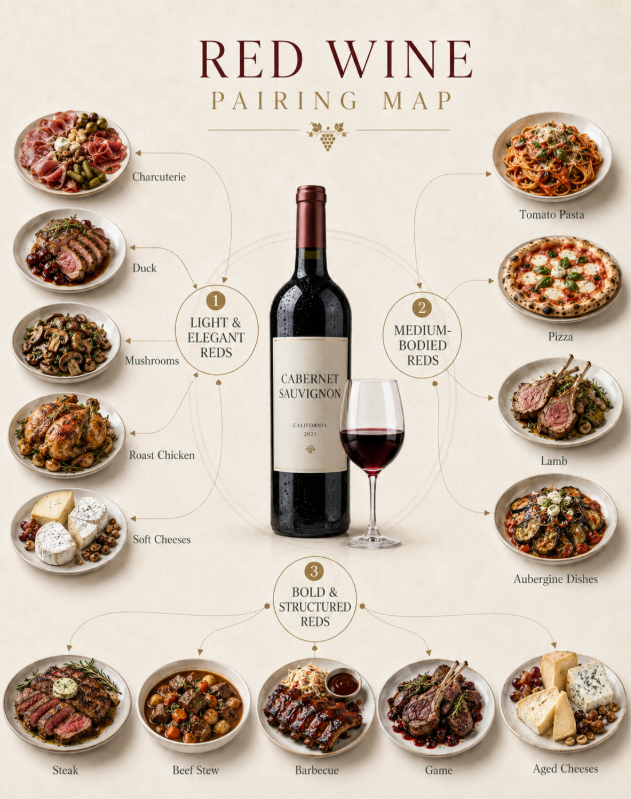
Light Red Wines
Light reds are delicate, fresh and often slightly earthy or fruity. They are perfect when you want red wine without too much weight.
They pair well with roast chicken, turkey, duck, mushrooms, grilled vegetables, tuna, charcuterie, soft cheeses and earthy dishes.
Pinot Noir, Gamay, Frappato, Cinsault and some lighter styles of Kalecik Karası are lovely examples.
Light reds are also a good choice when the food is too rich for white wine but too delicate for a powerful red.
Medium-Bodied Red Wines
Medium-bodied reds are perhaps the most food-friendly red wines. They have enough structure for flavourful dishes, but they are not usually too heavy.
They pair beautifully with pasta, pizza, lamb, grilled chicken, aubergine dishes, tomato sauces, meatballs, roasted vegetables and semi-hard cheeses.
Sangiovese, Tempranillo, Merlot, Barbera, Grenache, Cabernet Franc and Kalecik Karası are excellent examples.
These are the wines I often choose for dinners where there are several dishes on the table.
Full-Bodied Red Wines
Full-bodied reds are powerful, structured and intense. They need food with enough richness to match them.
They pair best with steak, slow-cooked lamb, beef stew, grilled meats, game, rich sauces and aged cheeses.
Cabernet Sauvignon, Syrah, Malbec, Nebbiolo, Bordeaux blends, Barolo, Brunello and Boğazkere are examples of wines that need food with depth.
A full-bodied red can be magnificent, but it should not dominate the table. The best pairings give the wine space to soften and the food space to shine.
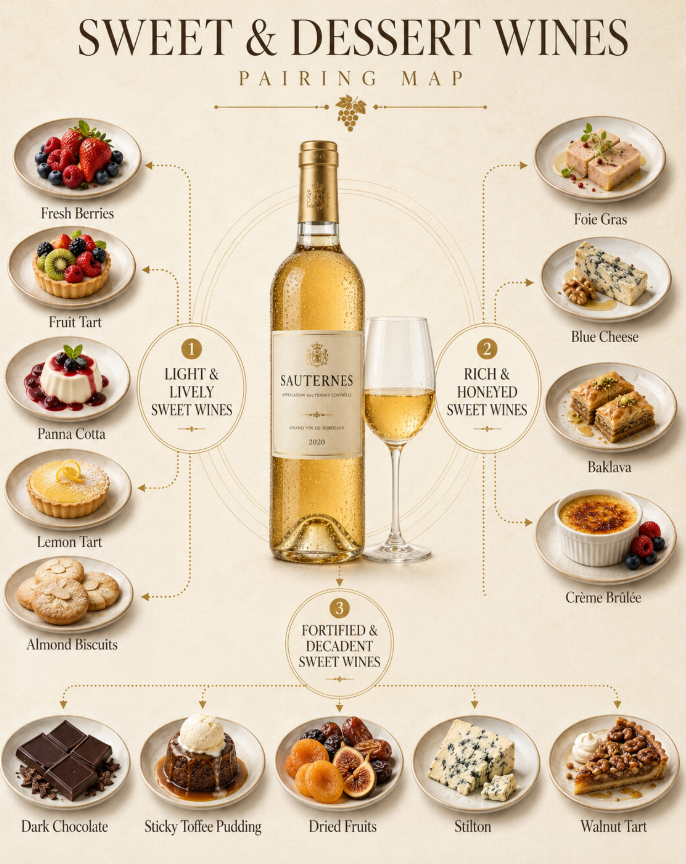
Sweet and Dessert Wines
Sweet wines are often misunderstood, but they can be some of the most complex, elegant and age-worthy wines in the world. They are not simply “sweet” in a simple sense. The best examples have balance: sweetness, acidity, texture, aroma and freshness working together.
A beautiful sweet wine should never feel heavy or sugary. It should feel lifted. Acidity is what keeps it alive. This is why wines such as Sauternes, Tokaji, late-harvest Riesling and Moscato d’Asti can taste rich and generous, but still elegant and refreshing.
Sweet wines pair beautifully with fruit tarts, panna cotta, crème brûlée, almond biscuits, baklava, blue cheese and foie gras. They can also be wonderful with salty or savoury foods, because sweetness creates contrast. This is why Sauternes with foie gras or blue cheese is such a classic pairing: the richness and saltiness of the food are balanced by the wine’s sweetness and acidity.
Lighter sweet wines, such as Moscato d’Asti or off-dry Riesling, are lovely with fresh berries, fruit-based desserts, lemon tart and delicate pastries. Richer, honeyed wines such as Sauternes, Tokaji and late-harvest Chenin Blanc work beautifully with crème brûlée, baked fruit, almond desserts, baklava and soft blue cheeses. Fortified sweet wines such as Port, Madeira and sweet Sherry are better with deeper, more intense flavours like dark chocolate, dried fruits, nuts, sticky toffee pudding and aged cheeses.
One important rule is that the wine should usually be sweeter than the dessert. If the dessert is sweeter than the wine, the wine can taste thin, sharp or sour. But when the balance is right, sweet wine can be magical: it adds richness, perfume and a beautiful sense of indulgence to the end of a meal.
For me, sweet wines feel like a quiet luxury. They are not always wines to drink quickly or casually. They are wines to slow down with — a small glass, a beautiful dessert, a piece of cheese, or something nostalgic like baklava. They remind us that sweetness in wine can be sophisticated, emotional and deeply pleasurable.
Chicken and Turkey
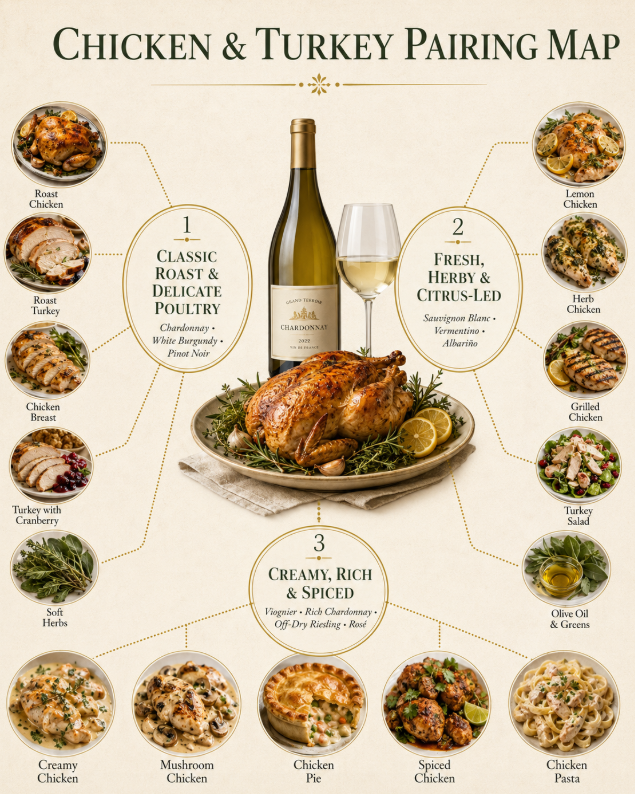
Chicken and turkey are some of the most flexible foods to pair with wine because they are naturally mild in flavour. They do not usually dominate the wine, which gives you many options. The most important thing is not only the meat itself, but how it is cooked: roasted, grilled, creamy, spicy, lemony, herby or slow-cooked.
A simple roast chicken is one of the most beautiful dishes for wine. It has richness from the skin, tenderness from the meat, and often a savoury, comforting flavour. Chardonnay is a classic choice, especially if the chicken is buttery or golden and roasted. White Burgundy can be particularly elegant here, bringing both freshness and texture. If you prefer red wine, Pinot Noir is a lovely match because it is soft, graceful and not too heavy.
Turkey works in a similar way, but it can be slightly leaner and drier, so it benefits from wines with freshness and softness rather than too much power. Pinot Noir, Grenache, Gamay, Riesling, Chardonnay and lighter Rhône-style reds can all work beautifully. For roast turkey, especially with herbs, cranberry sauce or stuffing, a wine with bright fruit and gentle structure is usually best.
Creamy chicken dishes need a wine with more body. Chicken in a mushroom cream sauce, chicken pie, chicken with tarragon, or creamy pasta with chicken will pair beautifully with Chardonnay, white Burgundy, Viognier or a richer white Rhône blend. These wines have enough texture to match the creaminess, but still enough freshness to stop the dish from feeling heavy.
Lemon and herb chicken needs a completely different style. When the dish has citrus, garlic, parsley, rosemary, thyme or olive oil, choose something fresher and brighter. Sauvignon Blanc, Vermentino, Albariño, Assyrtiko, Grüner Veltliner or a crisp Chardonnay can work very well. The wine should feel like it is lifting the dish, almost like an extra squeeze of lemon.
Grilled chicken is lovely with medium-bodied wines. If it is simply grilled with herbs, a rosé, Pinot Noir, Grenache or lightly oaked Chardonnay can be beautiful. If it has smoky or charred flavours, you can go slightly richer, perhaps with a Côtes du Rhône, Rioja Crianza, Syrah or a fuller rosé.
Spicy chicken needs care. Very tannic or high-alcohol reds can make spice feel hotter, so it is better to choose wines with freshness, fruit or a little sweetness. Off-dry Riesling, Gewürztraminer, rosé, sparkling wine or a juicy light red can be excellent. For Moroccan, Turkish, Middle Eastern or Mediterranean-style spiced chicken, Grenache, rosé, Viognier or aromatic whites can be very elegant.
With chicken and turkey, the sauce and seasoning matter more than the meat itself. A roast chicken with butter and herbs, a creamy mushroom chicken, a lemon chicken, and a spicy grilled chicken all need different wines. Once you look at the flavour around the dish, the pairing becomes much easier.
For me, chicken and turkey are perfect examples of how wine pairing is not about strict rules. They allow you to play with both white and red wine. If the dish is fresh and citrusy, choose a crisp white. If it is creamy, choose a richer white. If it is roasted, choose Chardonnay or Pinot Noir. If it is spicy, choose something aromatic, fresh or slightly off-dry. The best pairing is the one that makes the dish feel more complete.
Lamb
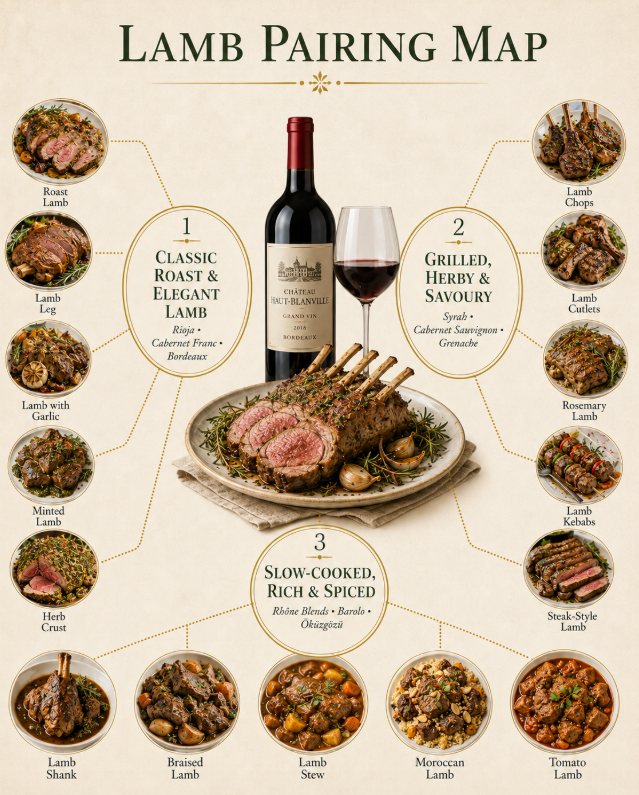
Lamb is one of the most beautiful meats to pair with wine because it has natural richness, tenderness and a slightly savoury, herbal character. It is more distinctive than chicken, but usually softer and more aromatic than beef, which makes it incredibly wine-friendly.
The best wine for lamb depends on how it is cooked. Grilled lamb, slow-cooked lamb, roast lamb and spiced lamb all need slightly different styles of wine. This is why lamb is so interesting: it can work with elegant medium-bodied reds, powerful structured reds, and even some deeper rosés depending on the dish.
For grilled lamb chops, lamb cutlets or lamb kebabs, choose wines with structure, freshness and savoury depth. Syrah, Rioja, Bordeaux, Cabernet Franc, Grenache and Chianti Classico are excellent choices. The char from the grill works beautifully with wines that have spice, smoke, herbs or firm tannins.
Slow-cooked lamb needs a wine with warmth and depth. Dishes such as lamb shoulder, lamb shank, braised lamb or lamb stew pair beautifully with Rioja Reserva, Bordeaux, Rhône reds, Barolo, Brunello, Öküzgözü and Boğazkere. The meat becomes softer and richer as it cooks, so the wine should feel layered, generous and slightly earthy.
Roast lamb is a classic pairing moment. If it is served with rosemary, thyme, garlic or mint, look for wines with herbal or savoury notes. Cabernet Franc, Syrah, Rioja, Bordeaux blends and Grenache-based wines can be especially elegant. The herbs in the dish echo the aromatic side of the wine, creating a pairing that feels natural rather than forced.
Spiced lamb, especially Turkish, Middle Eastern, Moroccan or Mediterranean-style lamb, can be beautiful with wines that have fruit, spice and freshness. Grenache, Syrah, Côtes du Rhône, Rioja, Kalecik Karası, Öküzgözü and deeper rosé can all work well. If the dish has yoghurt, tomato, cumin, paprika, aubergine or peppers, avoid wines that are too harsh or overly tannic. You want warmth and balance, not bitterness.
Turkish wines are especially exciting with lamb. Öküzgözü has generous red fruit, freshness and softness, which makes it lovely with grilled lamb, kebabs and tomato-based lamb dishes. Boğazkere is more powerful and tannic, so it works better with richer, fattier or slow-cooked lamb. Kalecik Karası can be beautiful with lighter lamb dishes, especially when there are herbs, aubergine or grilled vegetables on the table.
The sauce also matters. Lamb with mint sauce needs freshness. Lamb with red wine jus needs depth. Lamb with yoghurt and spices needs fruit and softness. Lamb with aubergine, tomato or peppers works beautifully with Mediterranean reds such as Sangiovese, Grenache, Rioja or Turkish red varieties.
For me, lamb is a very emotional and generous food pairing. It belongs to long dinners, shared plates, herbs, olive oil, spice and warmth. A good lamb pairing should not feel too heavy. It should bring out the sweetness of the meat, soften the savoury richness, and add freshness, spice and elegance to the table.
Cheese
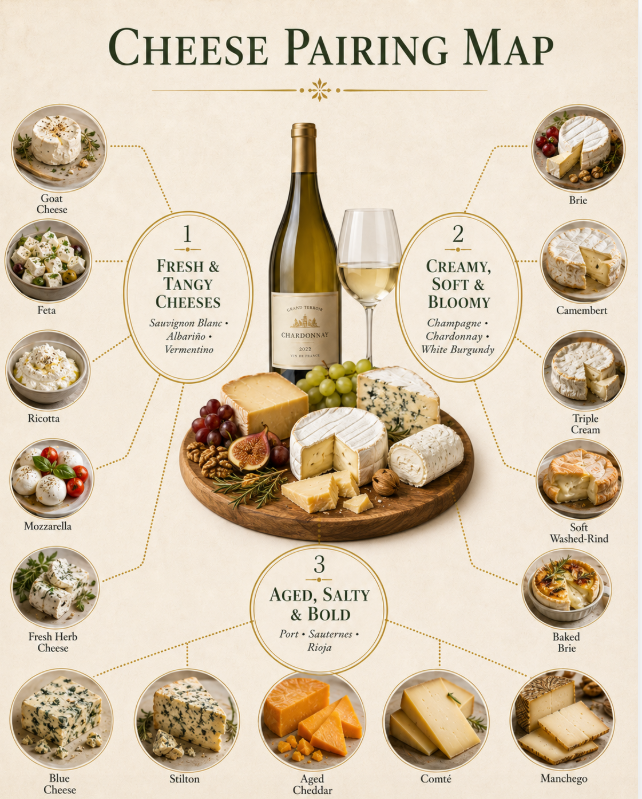
Cheese pairing is more complex than people often think, and that is what makes it so interesting. Many people automatically reach for red wine with cheese, but red wine is not always the best answer. In fact, some of the most beautiful cheese pairings are with white, sparkling or sweet wines.
The key is to think about the cheese’s texture, saltiness, age and intensity. A fresh goat cheese needs a very different wine from a creamy Brie, a salty blue cheese, or a hard aged Comté. Cheese has fat, salt and richness, so the wine needs either freshness, sweetness, bubbles or structure to bring balance.
Fresh cheeses, such as goat cheese, feta, ricotta and mozzarella, usually work best with fresh wines. Sauvignon Blanc is a classic with goat cheese because its acidity cuts through the creaminess and lifts the tangy flavour of the cheese. Crisp whites such as Sancerre, Albariño, Vermentino, Assyrtiko and Grüner Veltliner can also work beautifully. These wines keep the pairing bright, clean and elegant.
Creamy cheeses, such as Brie, Camembert and triple-cream cheeses, need acidity or bubbles. Champagne is one of the most elegant choices because the bubbles refresh the palate and cut through the richness. Chardonnay can also be beautiful, especially with Brie or Camembert, because the wine’s texture matches the creaminess of the cheese. A good white Burgundy with soft cheese can feel very luxurious.
Blue cheese is one of the clearest examples of why sweet wine works so well with savoury food. The saltiness and intensity of blue cheese need contrast. Port with Stilton, Sauternes with Roquefort, or Tokaji with blue cheese can be magnificent. The sweetness softens the salt, while the acidity keeps the pairing from feeling heavy.
Hard cheeses, such as aged Cheddar, Comté, Parmesan, Manchego and Gruyère, can handle more structure. These cheeses have depth, nuttiness and savoury flavour, so they work well with wines such as Rioja, Cabernet Sauvignon, aged Bordeaux, Nebbiolo, Chianti Classico and mature red wines. The older and firmer the cheese, the more structure the wine can usually have.
Washed-rind cheeses, such as Époisses or Taleggio, can be more challenging because they are powerful and aromatic. They often work better with white wines, sparkling wines or off-dry styles rather than heavy reds. Riesling, Gewürztraminer, Champagne or a textured white can be beautiful because they bring freshness and perfume without clashing.
A simple rule I like is this: fresh cheeses need fresh wines, creamy cheeses need acidity, salty cheeses love sweetness, and aged cheeses can handle structure. Once you understand this, a cheese board becomes much easier to pair.
For a mixed cheese board, sparkling wine is often the safest and most elegant choice. Champagne, Crémant or English sparkling wine can move across different textures and flavours, from soft cheeses to salty cheeses and harder styles. If you prefer still wine, choose either a fresh white or a medium-bodied red that is not too tannic.
For me, cheese and wine pairing is about contrast as much as harmony. A sharp goat cheese with Sauvignon Blanc feels bright and clean. Brie with Champagne feels soft and elegant. Blue cheese with Sauternes feels indulgent and dramatic. Aged Comté with mature red wine feels deep, savoury and comforting. The best pairing depends on the mood of the table, but when cheese and wine work together, they can create one of the most satisfying moments of a meal.
Vegetarian Dishes
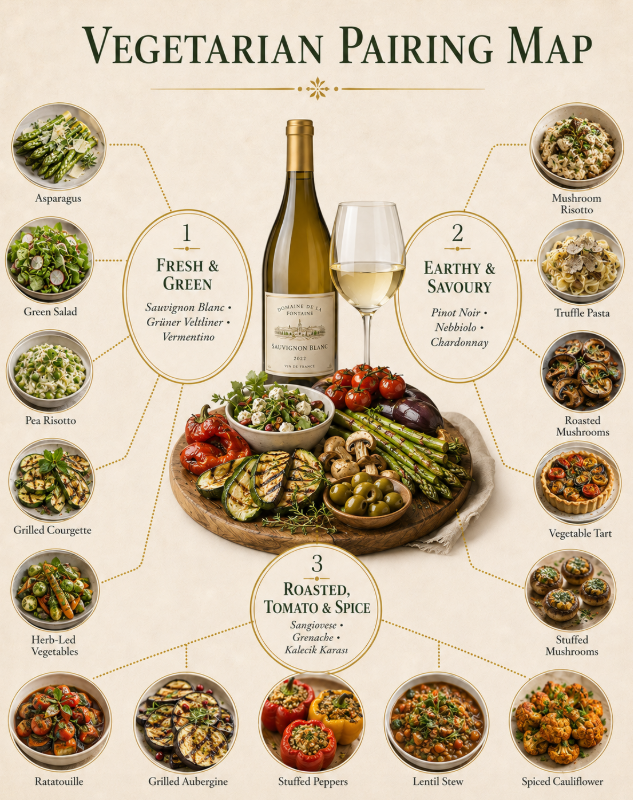
Vegetarian food can be incredibly exciting with wine because vegetables are not one single flavour category. They can be fresh, green, earthy, smoky, sweet, bitter, creamy, spicy or deeply savoury depending on how they are prepared. This is why vegetarian pairing is not about choosing “a wine for vegetables” — it is about looking at texture, cooking method, herbs, spices and sauce.
Green vegetables usually love fresh, crisp wines. Dishes with asparagus, courgette, peas, green beans, artichokes, herbs or leafy salads work beautifully with Sauvignon Blanc, Grüner Veltliner, Albariño, Vermentino or Assyrtiko. These wines bring brightness and lift, especially when the dish has lemon, olive oil, herbs or a fresh dressing.
Mushrooms need a very different approach. They have an earthy, savoury depth that pairs beautifully with wines that share the same character. Pinot Noir is a classic choice, but Nebbiolo, aged Chianti, red Burgundy, Barbaresco or even a textured Chardonnay can also be lovely. Mushroom risotto, truffle pasta, roasted mushrooms or a mushroom tart can feel very elegant with the right wine.
Aubergine is one of the most wine-friendly vegetables because it has richness, softness and often a smoky or savoury quality. It works beautifully with Sangiovese, Grenache, Kalecik Karası, Côtes du Rhône, Rioja or a dry rosé. If the aubergine is cooked with tomato, choose a wine with good acidity. If it is grilled or smoky, choose something with warmth and soft spice.
Roasted vegetables can handle more body because roasting brings out sweetness and caramelisation. Roasted carrots, peppers, squash, onions, cauliflower and sweet potato pair well with fuller whites, dry rosé or medium-bodied reds. Chardonnay, Viognier, Grenache, Sangiovese and Tempranillo can all work depending on the seasoning.
Tomato-based vegetarian dishes need wines with acidity. Ratatouille, tomato pasta, vegetable lasagne, shakshuka, stuffed peppers or aubergine in tomato sauce are beautiful with Chianti, Barbera, Sangiovese, Kalecik Karası or rosé. The acidity in the wine matches the acidity in the tomato, which keeps the pairing fresh and balanced.
Spiced vegetarian dishes need softness and freshness rather than heavy tannin. Lentil curry, chickpea stew, spiced cauliflower, Turkish meze, Moroccan vegetables or Indian-inspired dishes can work beautifully with Riesling, Gewürztraminer, rosé, Grenache, Kalecik Karası or lighter juicy reds. If there is chilli, avoid high alcohol and aggressive tannins.
Cheese-based vegetarian dishes can go in many directions. Goat cheese loves Sauvignon Blanc. Halloumi is lovely with rosé, Assyrtiko, Vermentino or a crisp white. Creamy vegetable gratins or cheesy pasta work well with Chardonnay or white Burgundy. Feta, herbs and olive oil are beautiful with fresh whites and dry rosé.
For me, vegetarian pairings are about paying attention to the personality of the dish. Is it green and fresh? Choose a crisp white. Is it earthy and mushroom-led? Choose Pinot Noir or Nebbiolo. Is it smoky and aubergine-based? Choose Grenache, Sangiovese or Kalecik Karası. Is it spicy? Choose something aromatic, fresh or softly fruity.
Vegetarian food gives wine so much room to shine. Without meat dominating the plate, the smaller details become more important: herbs, citrus, olive oil, spice, smoke, creaminess and texture. A good pairing should make the vegetables feel more vivid, more generous and more complete.